This post contains affiliate links. If you purchase through them, I may earn a commission at no additional cost to you.
You know the feeling. It’s somewhere around 4pm on Sunday. The weekend isn’t even over yet. But your stomach is already tightening, your brain is already running through tomorrow’s schedule, and the low-grade dread has officially moved in for the evening.
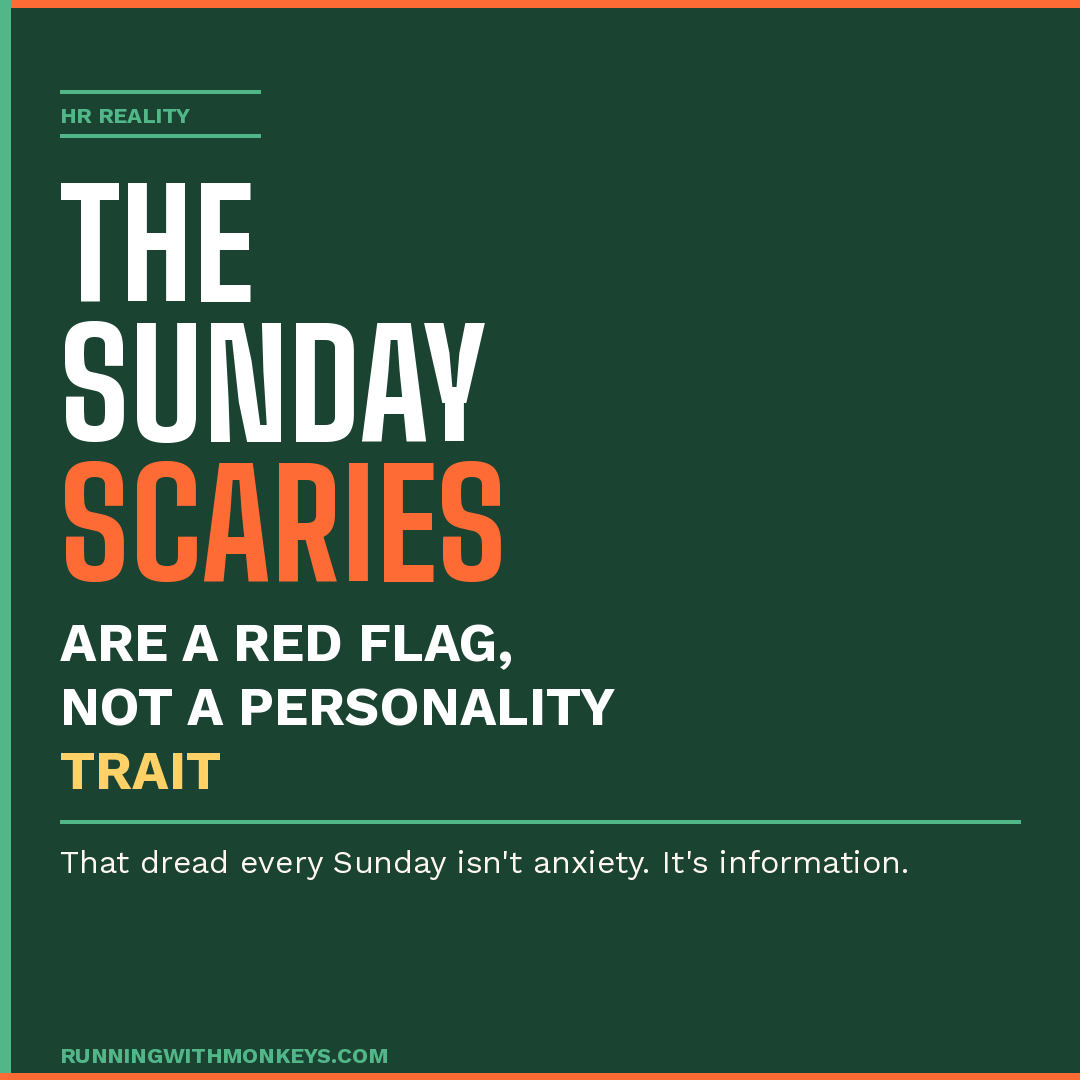
Most people call it the Sunday Scaries. A lot of people treat it like a personal flaw. Like it’s just who they are. Anxious. Sensitive. Bad at relaxing.
It isn’t.
Your body is sending you a message. The problem is nobody taught you how to read it.
The Sunday Scaries are not a quirk of your personality. They are a stress response. Your nervous system has learned, through repeated experience, that Monday means something threatening is coming. And it’s doing exactly what it’s designed to do: warn you in advance so you can prepare.
The question worth sitting with is this: what has your workplace taught your nervous system to expect?
Because here’s the thing. People who genuinely enjoy their jobs, or at least feel safe and respected at them, don’t spend Sunday afternoon dreading the next 24 hours. They might feel a little “back to the grind” energy. Maybe some mild reluctance to leave the weekend behind. That’s normal.
What is not normal is dread. Anxiety that shows up before anything has even happened. Physical symptoms, tight chest, trouble sleeping Sunday night, irritability that starts building before dinner. That isn’t a character flaw. That’s a warning system doing its job.
What your body is actually telling you
Your nervous system isn’t dramatic. It doesn’t invent threats out of nowhere. If Sunday nights feel like bracing for impact, it’s because at some point, impact happened. Repeatedly. Maybe it was walking into an unpredictable boss who could turn on you for no visible reason. Maybe it was a culture where you were always one wrong word away from being frozen out. Maybe it was chronic overload, the kind where you know Monday means drowning again and nobody is going to throw you a rope.
Whatever built the pattern, your body learned it. And now it runs the warning on schedule, every Sunday, whether you want it to or not.
That isn’t anxiety as a personality trait. That is a completely logical response to an environment that has not been safe.
Three things to actually do about it before Monday
Here’s where most advice fails you. It tells you to meditate, take a bath, put your phone down. And sure, those things aren’t bad. But they’re treating the symptom. They’re trying to quiet the alarm without addressing what’s triggering it.
So here are three things that actually help, both short-term and bigger picture.
1. Name it out loud.
Not to your boss. Not to HR. Just to yourself. Say it plainly: “I am dreading tomorrow because [specific thing].” The vague dread is almost always worse than the named thing. Once you name it, you can decide if it’s something you can prepare for, protect yourself from, or start planning your way out of.
2. Do one thing Sunday that is entirely yours.
Not productive. Not work-adjacent. Not something you’re doing because you should. One thing that reminds your nervous system that your life exists outside of that job. Cook something you like. Call someone who makes you laugh. Watch the thing you’ve been putting off. The point is to interrupt the pattern, even briefly, and remind yourself that Monday does not get to own Sunday too.
3. Start a running notes document.
This one is more strategic. If Sunday dread is a fixture in your life, something is consistently wrong. Start keeping a simple, private log. Date, what happened, how it made you feel, how it was handled. You don’t have to do anything with it right now. But patterns become very clear when they’re written down. And if you ever need to act, you’ll have something to work with.
If you want to go deeper on this, Conquering Burnout in a Toxic Workplace by Alison Flickinger is a practical read that goes beyond the surface-level advice. Surviving the Toxic Workplace by Linnda Durre is worth having on your shelf if you’re actively navigating a bad situation while figuring out your next move. And if you want to understand exactly who is behind the chaos, The Arsonist in the Office by Pete Havel breaks down how to fireproof your career against the people actively making it worse. (Disclosure: these are affiliate links. If you buy through them, I earn a small commission at no extra cost to you.)
The bigger picture
Sunday Scaries that happen once in a while, before a big presentation or a difficult week you can already see coming, that’s just being human.
Sunday Scaries that show up every single week like clockwork? That’s your body keeping score. And it’s worth listening to.
You are not broken. You are not too sensitive. You have not simply failed to master the art of relaxing.
You are responding, completely reasonably, to an environment that has not treated you well. The first step to changing that is recognizing the difference between anxiety that lives in you and anxiety that was put there by a situation you deserve to get out of.
One is something to manage. The other is something to fix.
This post is for informational purposes only and does not constitute legal or HR advice.
You survived another week. Now get the survival guide.
Every issue of the Running With Monkeys newsletter delivers one real story, one ready-to-use script, and one tactical move to help you get through the circus with your sanity intact. No corporate fluff. No toxic positivity. Just real talk from someone who’s been there.
Subscribe here. It’s free.